Meet Lemay Mushroom Operation
Spencer has made Central Illinois home for several years. To him, Springfield’s strength comes from its local character — a community where small businesses, producers, and residents are closely tied together in meaningful ways. For Spencer, that local connection became very important when he started his business.
What started as curiosity eventually turned into a small-scale farm, leaving a footprint to “break the market”. Spencer Lemay produces specialty mushrooms for the Springfield area and beyond. Lemay partners with The Farms of IL to distribute his delicacies to chefs, restaurants, wholesale outlets, home delivery and as featured products in other stores as well as, across farmer markets.
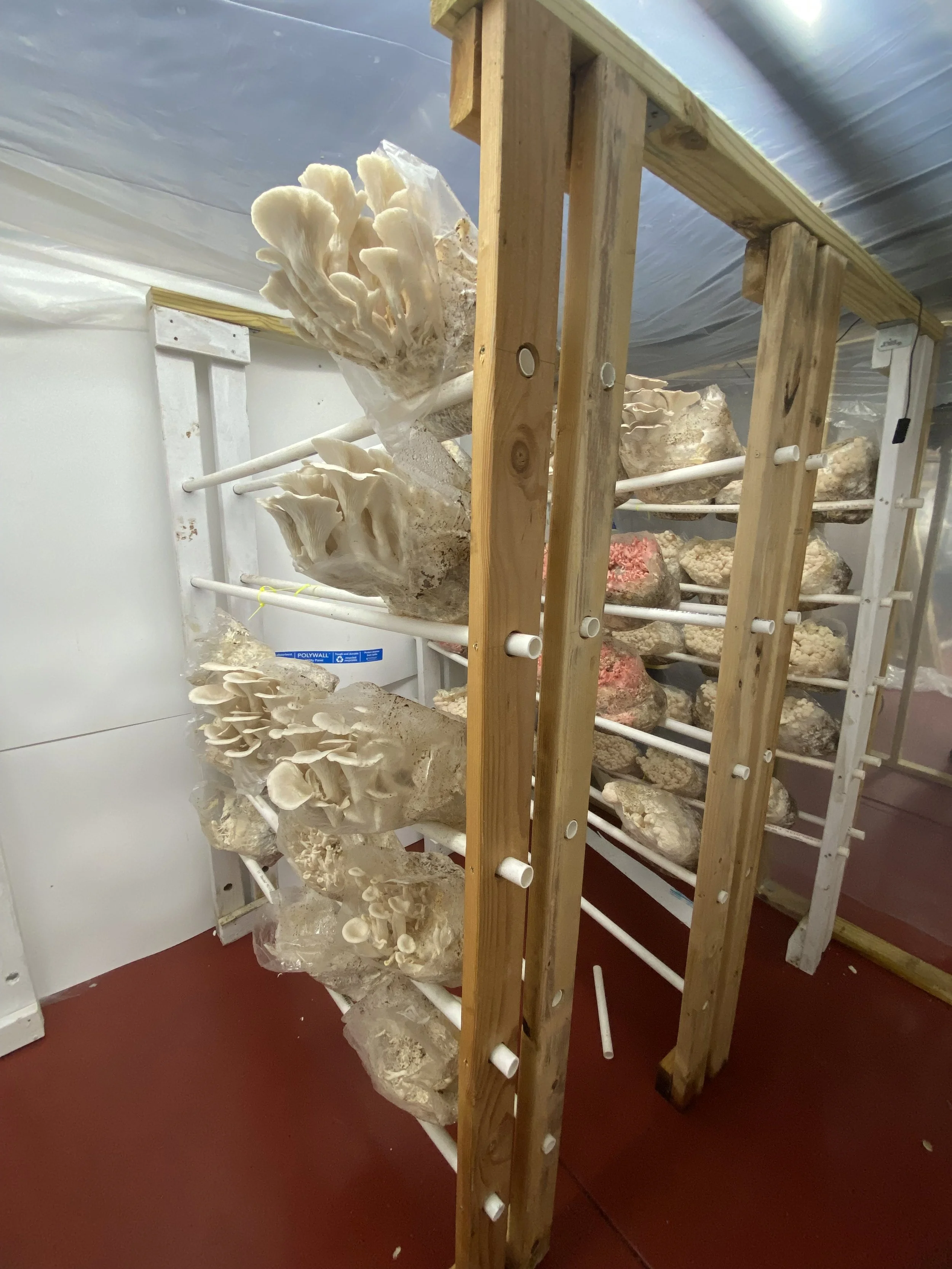
A Glimpse Inside the Grow Room
How It Started: A Christmas Gift That Changed Everything
Spencer’s introduction to growing mushrooms came through a simple Oyster Mushroom growing kit he received for Christmas. At the time, he had never really heard of mushroom cultivation. But once he saw what was possible, something clicked. “I never heard of it,” he said, “but I thought — I can do that”!
Why Mushrooms?
There were various reasons Spencer decided upon mushrooms for his business but the one that stuck out the most; Spencer, being Vegetarian, has for a long time incorporated mushrooms into his diet and appreciated them as a supplemental food source; now he is the producer helping establish the product to be local and fresh for others.
There are a lot of health benefits to mushrooms - Mushrooms are not only valued for flavor, but also for their nutritional profile. They are:
Low in Calories
A Great Source of Protein
Rich in Nutrients
Supportive of Digestive Health
Certain varieties, such as Lion’s Mane, are being studied for neurological benefits, including compounds like beta-glucans that are beneficial for cognitive support.
Spencer adds, “They’re savory — they’re amazing!”
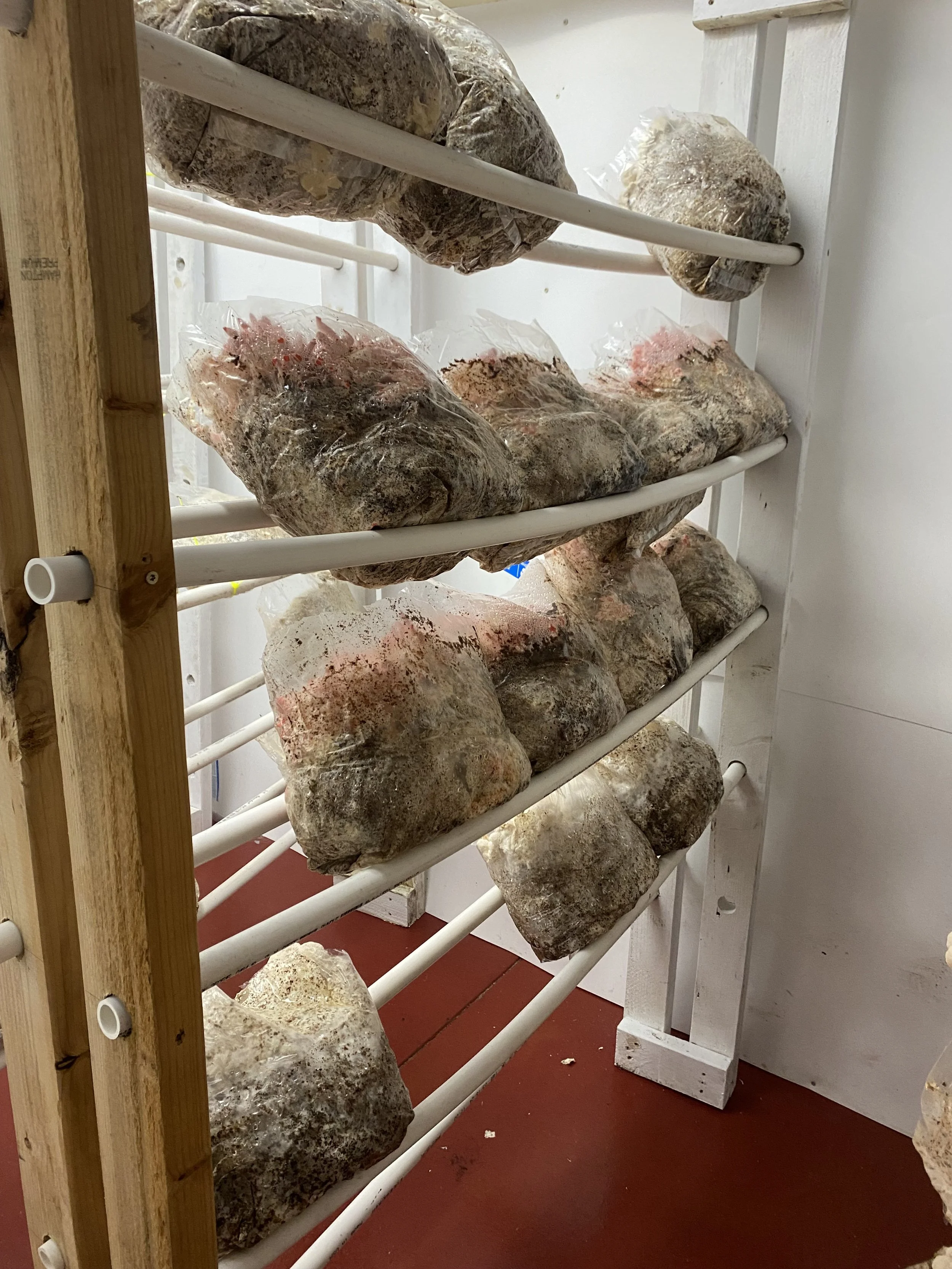
Experimenting, and Building a Method
Spencer learned from others, tested ideas himself, and gradually developed his own growing system. Mushrooms, especially specialty varieties, are considered a delicacy in culinary spaces, and Spencer saw an opportunity. “They’re a niche market,” he explained. That process of learning and adapting became central to how Lemay Mushroom Farm operates today.
Building While Working Full-Time
Like many small business owners, Spencer built Lemay Mushroom Farm while working a full-time job. That reality makes time one of the biggest constraints in growing the business. Running both commitments requires structure, discipline, and long hours behind the scenes.
As production increased, space quickly became a limiting factor. “I knew it was time to move somewhere bigger when I had to walk sideways to get through my basement!” he said. That transition marked a major shift — from a small home setup to a more structured growing operation capable of handling increased volume.
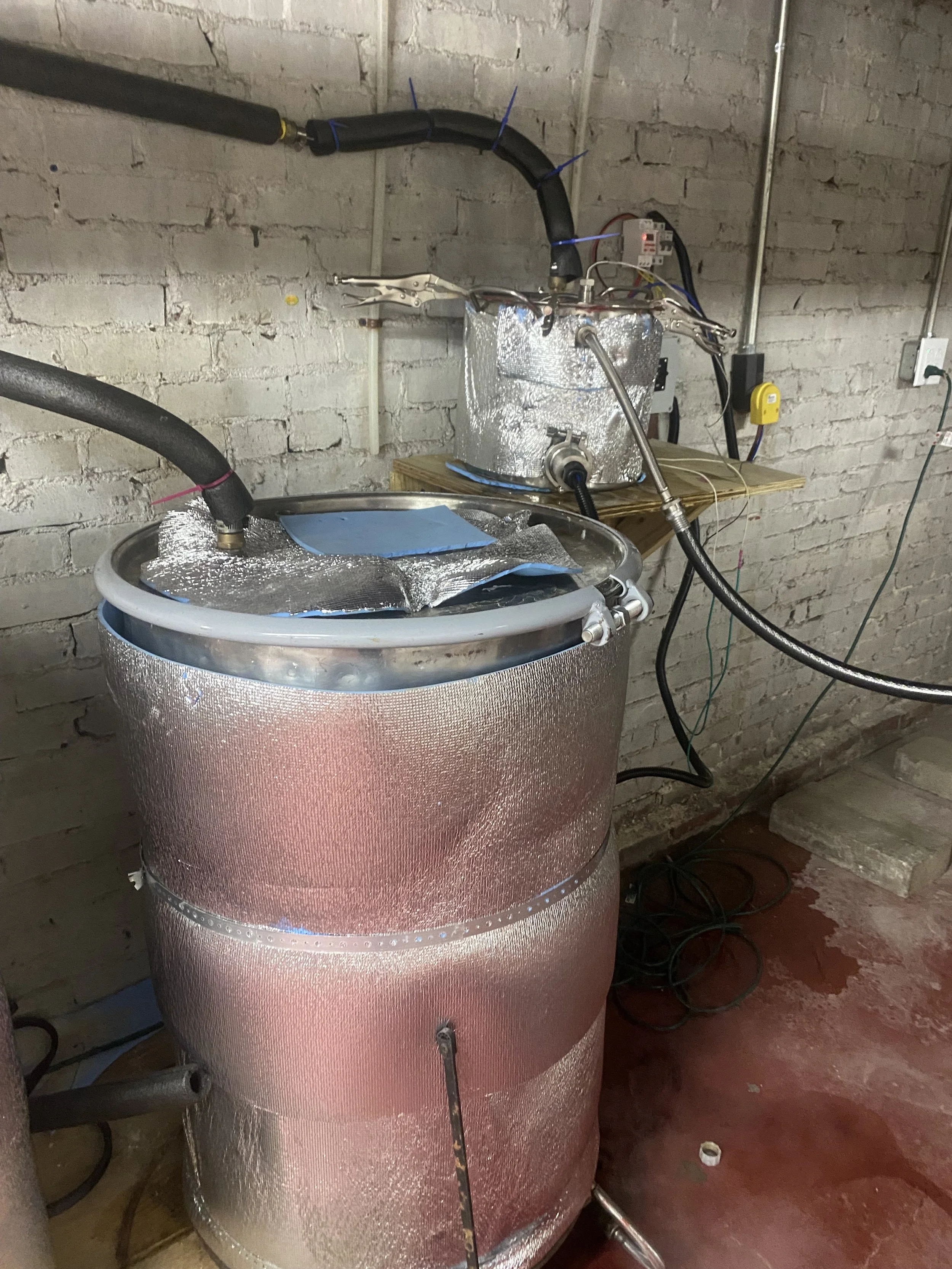
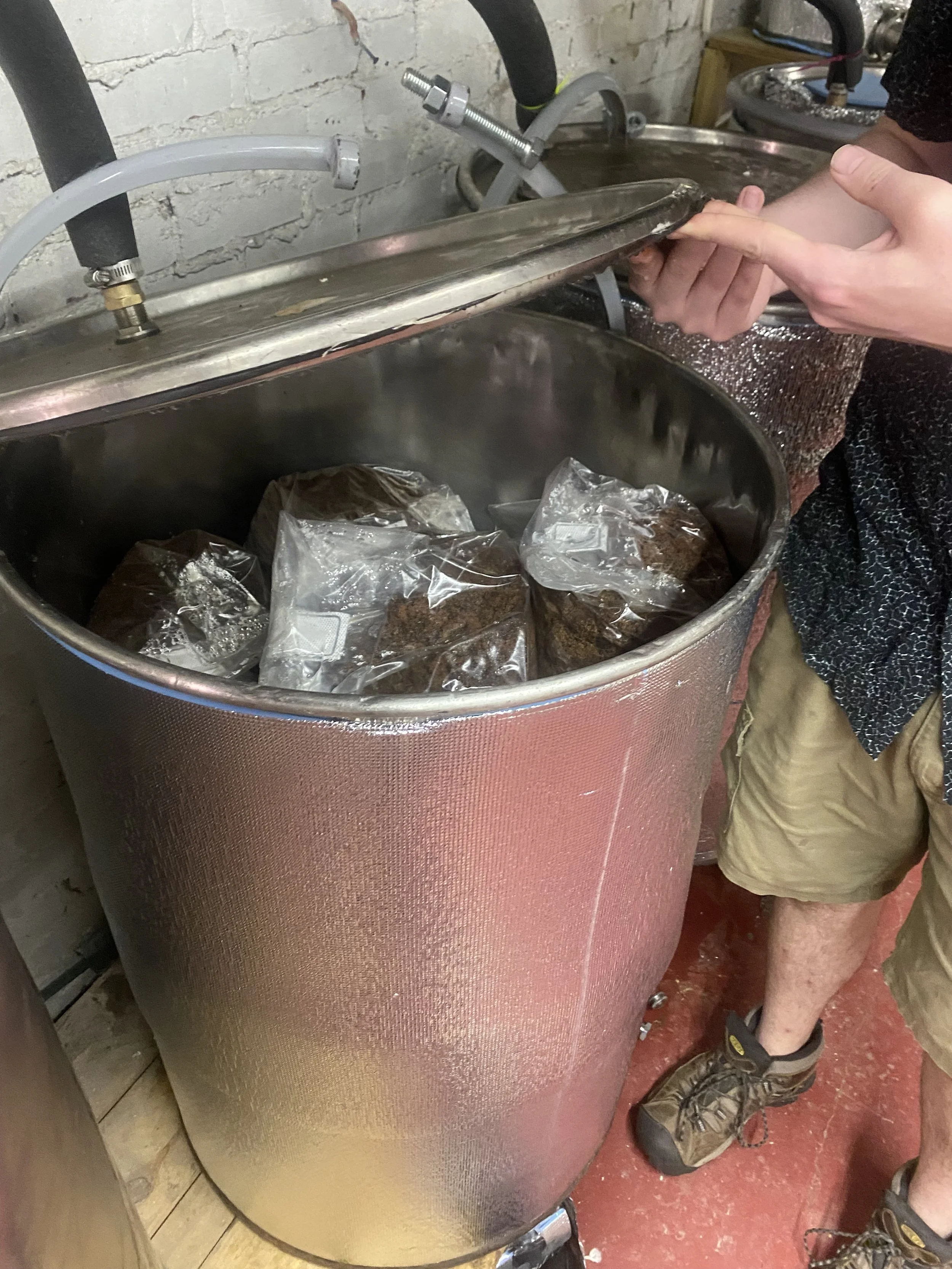
Homemade Sterilization Barrels
What Goes Into Growing Mushrooms
Mushroom cultivation is highly technical
Spencer uses a substrate made of:
50% hardwood sawdust (the same wood pellets that are typically burned to heat homes)
50% soybean hulls
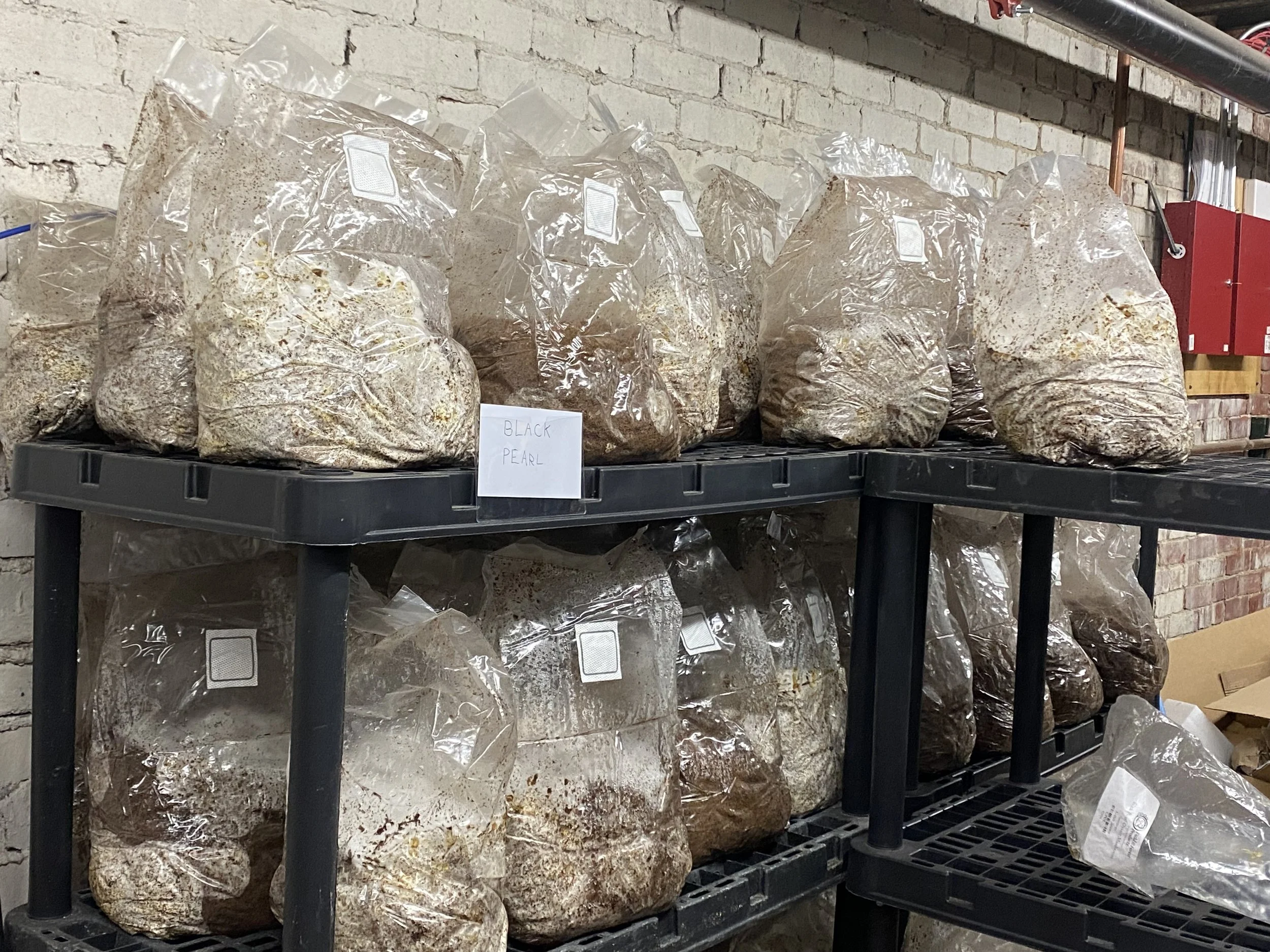
These materials are combined, bagged, and hydrated before being inoculated with spores. Over time, through trial and error, he refined this process — even experimenting with materials like straw before finding what worked best. “Straw was messy,” he said.
Once prepared, the bags are placed into sterilization barrels powered by a steam system Spencer built himself. The process runs for about 24 hours, eliminating contaminants completely.
After sterilization, once the material is cooled, it is moved into his sterile space, in front of the laminar flow hood; a clean-air environment. There, Spencer works quickly and efficiently along a sterile work surface, mixing grain and substrate under controlled airflow to prevent contamination.
Everything is sealed and transferred into the grow room, where the mushrooms begin their development cycle.
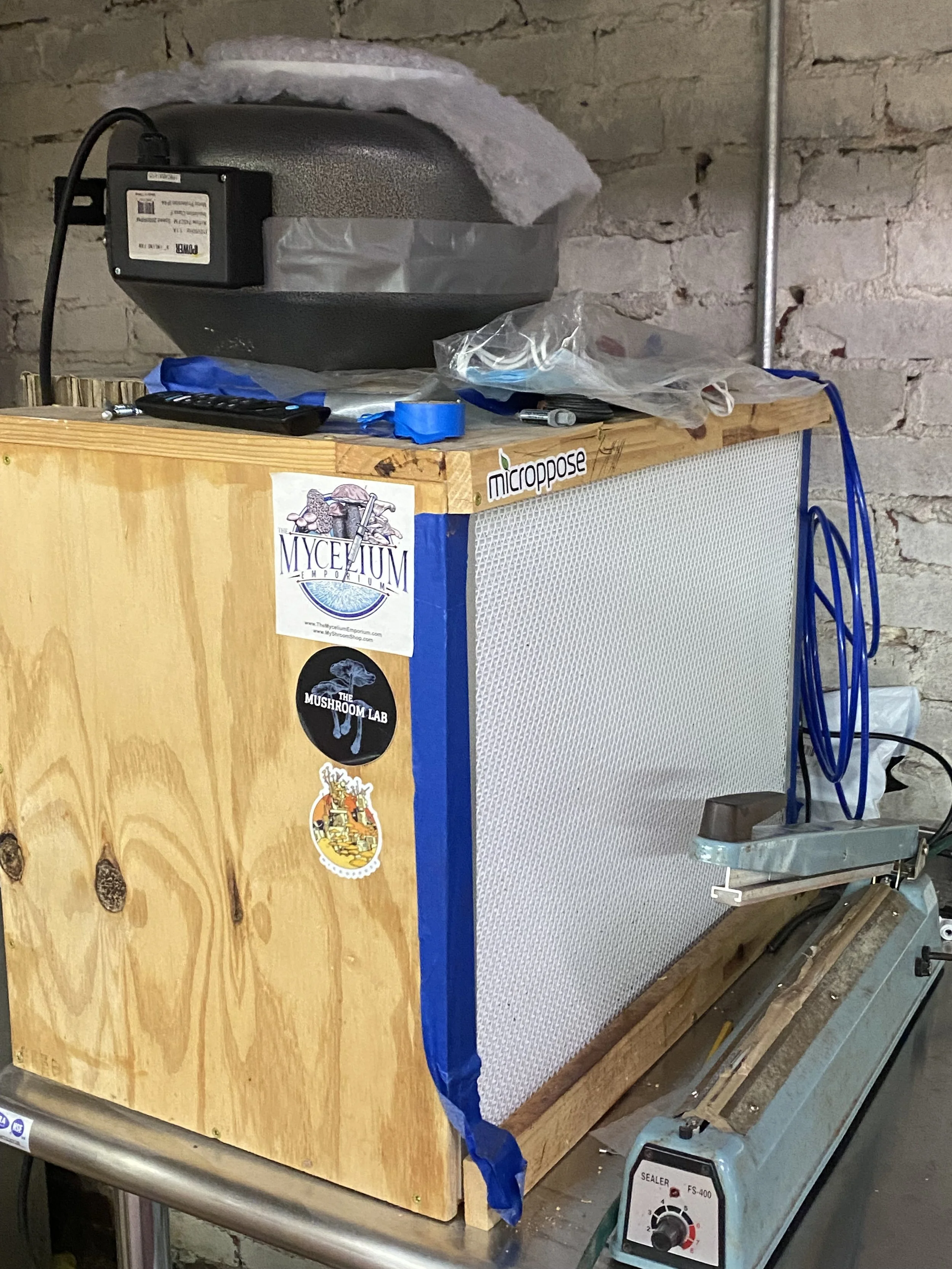
Laminar Flow Hood
Growth, Timing, and Harvest Cycles
Mushrooms grow in distinct stages.
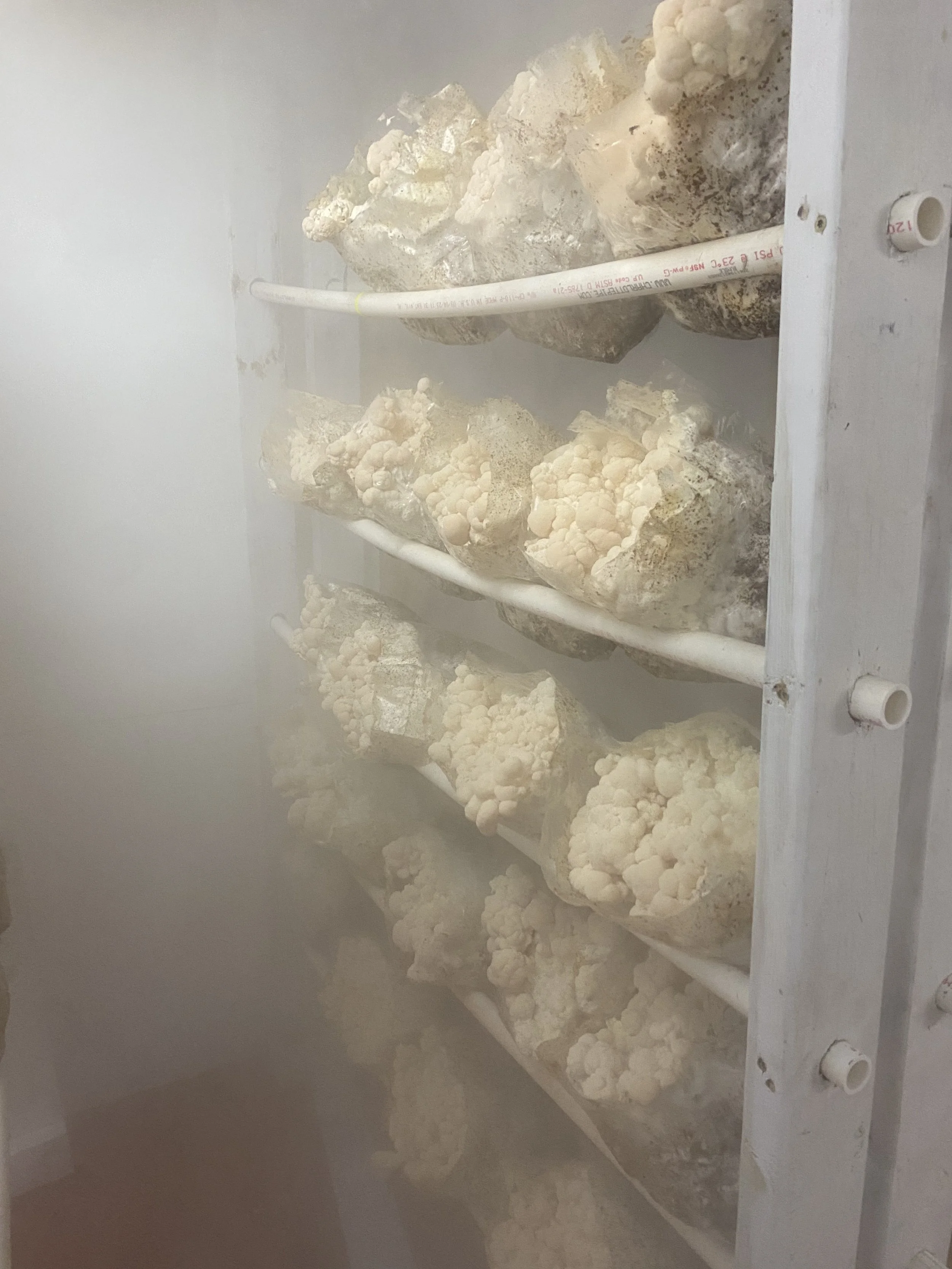
First, a small “pin” forms — the earliest visible stage of development. From there, growth accelerates rapidly. In some cases, mushrooms can double in size each day leading up to harvest.
Depending on the species:
Some Mushrooms are ready in about 3 weeks
Others can take up to 3 months to reach full maturity
That variation makes timing and environmental control extremely important. Even though mushrooms are grown indoors, seasonality still plays a role. Winter months can be especially challenging due to heating demands and temperature control. Spencer explained. “The polar vortex outside gets rough.”
Scaling Up Production
At full operation, Spencer produces between 100 and 350 pounds of mushrooms per week, depending on the species being grown. Despite that scale, Lemay Mushroom Farm is still largely a one-person operation — though Spencer has recently brought on his first employee to help support growth.
Sustainability Through Continuous Improvement
Over time, Spencer has developed more efficient and environmentally conscious growing methods. A major focus has been reducing waste and improving production systems. Spencer’s compost is distributed into the Springfield community and he has also been actively exploring ways to reduce plastic use, since current cultivation still relies on plastic grow bags.
Learning Through Every Challenege
A large part of Spencer’s work comes down to problem-solving. “I enjoy meeting new people and solving problems,” he said. “Through growing, I’ve found more cost-efficient and environmentally friendly ways to produce.” That mindset has helped him refine his operation while continuing to scale.
The Value of Buying Local
For Spencer, buying local is about more than preference — it’s about connection. “The taste and quality are better,” he said. “You know where it’s coming from, and you’re pouring back into your community.”
The Secret To Better Mushrooms
One of the most common issues with mushrooms is texture — specifically when they turn out soggy or slimy.
Spencer offers a simple fix: Start by adding water to the pan first, then add the mushrooms. As they cook, the mushrooms release their own water and shrink. Once that moisture evaporates, add oil at the end to allow the mushrooms to crisp properly. This method avoids trapping moisture early and creates a much better final texture.
More Than Mushrooms
Outside of mushroom farming, Spencer also works as a computer programmer and has been with a company in Springfield for over eight years. This dual role allows him to support his farm while continuing to build it at a sustainable pace. He wasn’t originally from Springfield, but moved for work and has since grown attached to the city. At home, he shares his space with his cat, Wasabi.
Looking Ahead - Spencer’s goals for Lemay Mushroom Farm are ambitious. “The sky’s the limit,” he said. “I want to distribute as many mushrooms as Springfield can handle.” His favorite variety is the pink oyster mushroom, which he describes as smoky, bacon-like in flavor, with a texture reminiscent of salmon. For Spencer, the most rewarding part is seeing the full process come together. “I’m so proud to see my ideas brought to life,” he said. “Turning a passion into something I can share with others has been really rewarding.”